


- Infection Control
Shop Our Top Infection Control Products
- Offers and Promotions


Recent advances in technology means the process is now easier than ever before. Many dentists however remain reluctant to convert to digital imaging with price and a lack of familiarity often the main reasons why. While the purchase costs involved with digital x-ray systems can be daunting, the benefits of making the switch can more than make up for the initial expense.
What are digital dental x-rays?
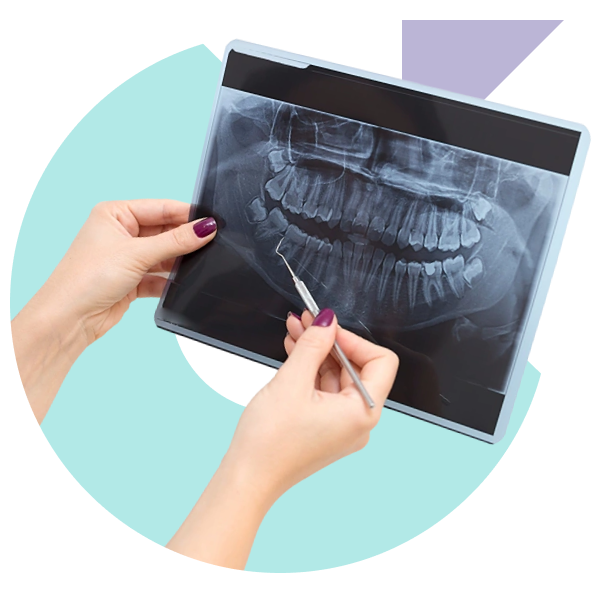
A digital dental x-ray is a procedure used to produce images of the inside (intraoral) or outside (extraoral) of a patient’s mouth. It is used to detect tooth decay, bone loss and other issues that an oral exam cannot pick up. Like traditional x-rays, digital imaging relies on electromagnetic radiation penetrating the human tissue and hitting a receptor at the other side. Whereas conventional x-rays use film as the receptor, digital x-rays use either imaging plates or a sensor connected to a computer as a receptor. Further details on how x-rays work and how to read them can be found in our broader Ultimate Guide to X-Rays.
Learning Curve
Digital radiography requires a completely different workflow to film x-rays. This can put off practices from adopting the technology. But as most people are now familiar with using computers and different types of software, migration to digital imaging should not be as overwhelming as it once was 10 or 20 years ago.
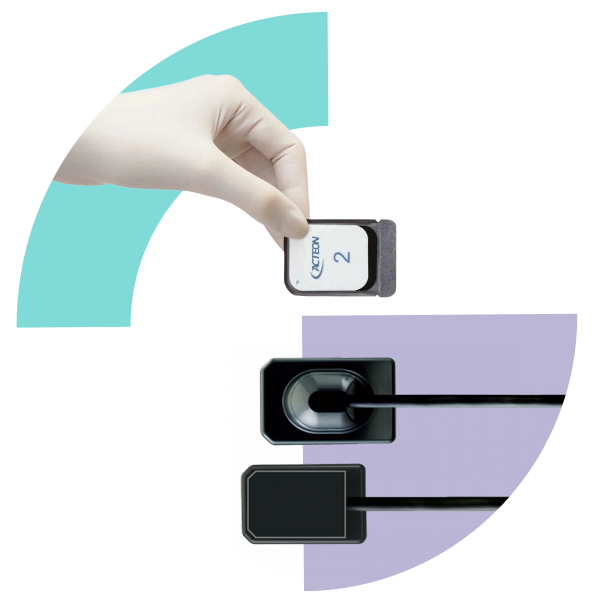
The digital system that most closely resembles that of traditional x-rays is phosphor plate radiography. The big difference between the two is that instead of using a light sensitive film sandwiched between two x-ray sensitive screens, a phosphor plate is used instead to record the image before it is scanned and transferred to a computer. Unlike with HR, there are also no cables required with PSP. Seen as the system that bridges the gap between traditional analogue x-rays and fully direct digital x-rays, phosphor plate radiography can provide a smoother transition for the more hesitant dentist or practice owner.
Share


What are the different types of digital x-rays?
What are the advantages of digital dental x-rays?
There are several significant advantages to using digital imaging over traditional methods.
Instant viewing
Digital imaging captured use HR takes only seconds to appear on a computer screen and imaging plate scanners like the PSPIX2 can receive PSP images in seconds. This can dramatically reduce chair time compared to traditional x-rays which take several minutes to process as they require a dark room and the use of chemicals to develop.
Improved sustainability
Digital imaging does not require the use of chemicals to process images. This means less time and less waste. It also makes digital x-rays more eco-friendly as there is no risk of any chemicals causing environmental damage when disposed of. There is also no film to dispose of.
Better images
Images from conventional x-rays are often of a poorer quality compared to digital x-rays which can now produce sharp, high-quality images that can be blown up to any size for accurate examination. One of the big advantages of PSP plate techniques is that the entire plate is capable of image capture unlike HR sensors which usually have some inactive area.
Are there any disadvantages to digital x-rays?
Well yes and no.
Start-up costs
Digital dental x-rays machines are often the highest priced item in a practice. Prices can range between £10,000 and £20,000 for a new, top-end HR digital sensor system. However, the long-term payoff of converting to digital imaging must be factored in. Digital sensors can be used indefinitely without the need for replacing whereas dentists using traditional techniques can spend thousands of pounds a year on film and dark room chemicals alone.
Likewise, phosphor plates can be used at least 200 times before they begin deteriorating and need replacing, and good image plate scanners can last a lifetime too with proper maintenance. Phosphor plate radiography is generally considered the least expensive way to convert from analogue to digital imaging. Upgrading to a digital system can also add value to your practice should it ever go up for sale, as it is an attractive proposition to dental practice buyers.